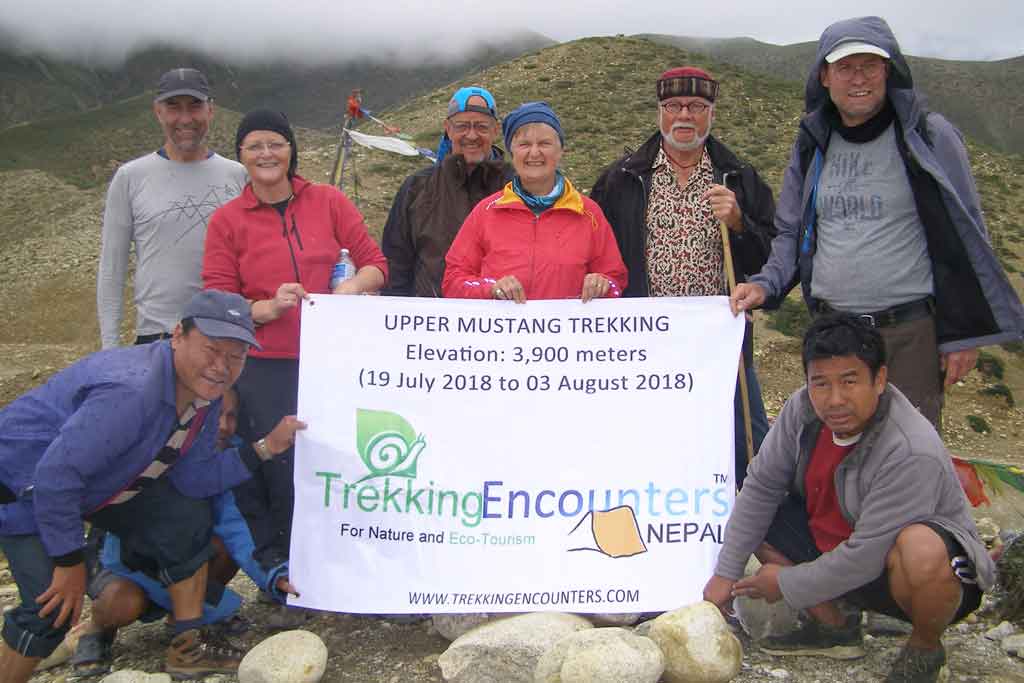
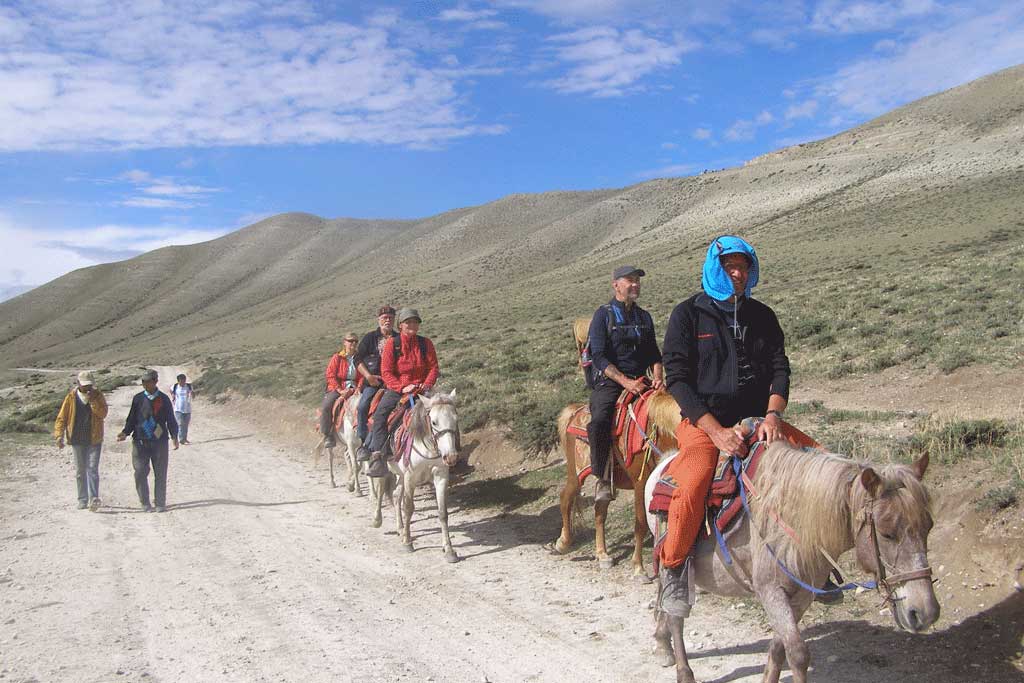
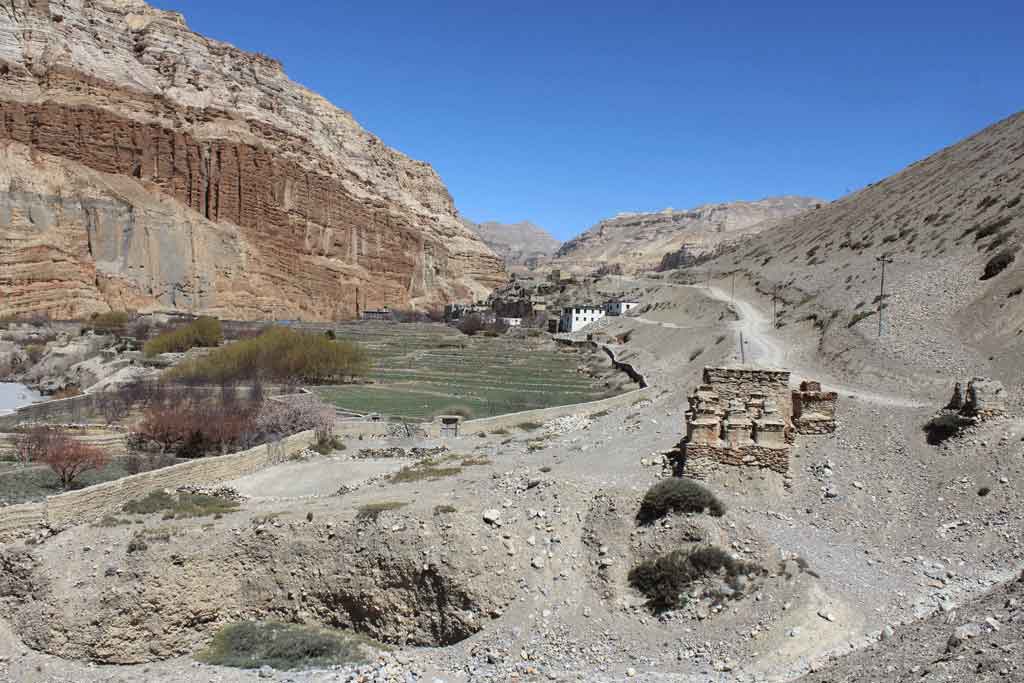
Mustang refers to as the country across the Himalayas. Our Upper Mustang Lo Manthang trek is specially for travellers who are keen to know more about Tibetan Buddhism. Government of Nepal has classified Upper Mustang as regulated region.
Still somewhat restricted, the government limits the visitors in this area with special trekking permits. The Home Ministry of Nepal opened the Upper Mustang region for trekkers in October 1991. Therefore, the land is also famous as the forbidden Kingdom.
Upper Mustang region is located north to the Middle West of Nepal on the map. The Upper Mustang trek starts generally from the north of Kagbeni at Annapurna Circuit trail. This region has a great influence from Tibet for culture and traditions. The men folk are either traders or farmers while the women mostly tend the fields.
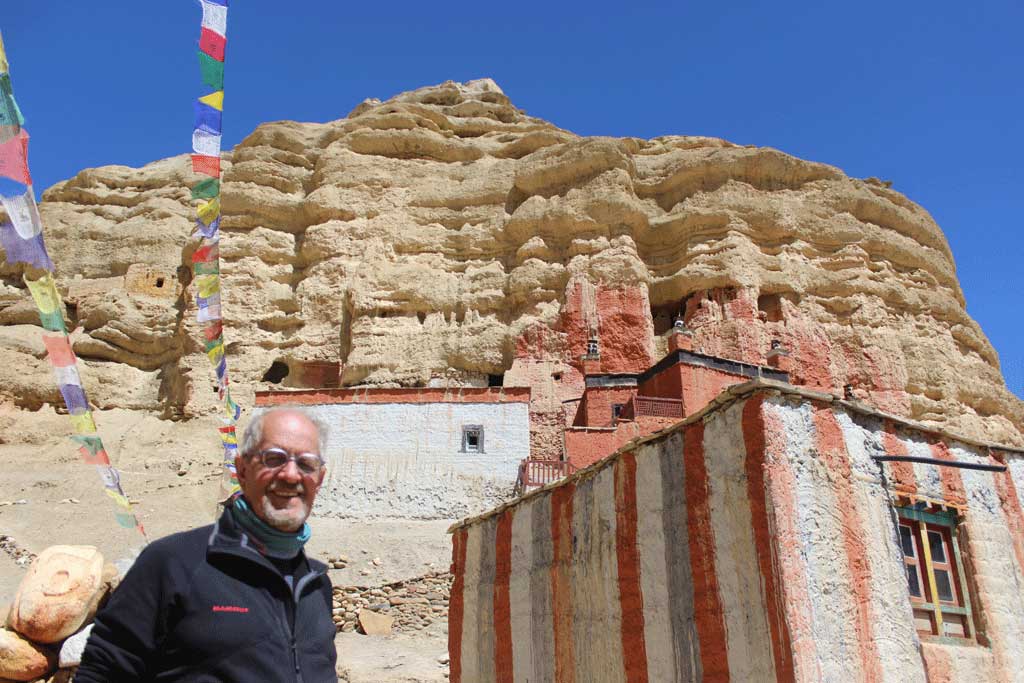
Lo Manthang and other villages in Upper Mustang are still untouched by the outside world. The 14th century monasteries are available active to preserve this magnificent Trans-Himalayan Kingdom with their unrivalled Buddhist shrines. The cliff hanging monasteries, thankas, mandalas, deities and cave dwelling people are the main attractions of Upper Mustang.
The traditional Upper Mustang trail used to be the Salt Road following through the bottom of the deepest gorge in the world- the Kali Gandaki. The extended Tibetan plateau up to Kagbeni has great rivers, fields with the highland and the pristine peaks of Annapurna and Nilgiri marking the horizon in the South.
Trekking in this forbidden Kingdom gives you the opportunity to go where only a few have been before. Most of the trek has deserts inhabited by the people of Tibetan origin. The scattered settlements have little sign of cultivation between villages. It is also worthy visiting Luri Gompa (Gumba) and the old villages of Yara and Ghara while in Upper Mustang.
Highlights
- Views of extended Tibetan plateau
- Panoramic views of Nilgiri, Annapurna and Dhaulagiri mountains
- The ancient walled city of Lo Manthang
- 14th century Monasteries and ancient villages
- Traditional Tibetan culture
- The great countryside, beautiful landscapes, rivers and streams